View from a lighthouse gallery walkway over a black sea at night, fog banks drifting, small vessel lights scattered on the water.

The Gallery

The outside walkway, a rail, and then the sea: black, moving, enormous. Fog banks drift through the beam's reach. Out there, at the edge of what the charts cover, lights answer. Fishing boats, freight, the ferry that runs whether or not anyone is on it. The lamp sweeps, and for a moment every one of them stands still, counted.

Skip to text version of this site

Better Networks — text version

The Signal Station

Better Networks is a software and digital studio in Ocean Grove, Victoria, working across Geelong, the Bellarine and the Surf Coast. This site is also a walkable signal station. Everything in it is written out here as plain pages.

Enter the station itself

The Exterior

ArrivalJetty, path and yard. The approach to a working signal station, kept by hands that are never seen.

A timber jetty at dusk reaching into still dark water, fog along the horizon, a lit lighthouse and outbuildings silhouetted in the distance.

The Jetty

Timber decking on black water, the far shore a rumour in the fog. The jetty is the only way in and the only way out, and it is kept like someone expects visitors. Rope, fresh tar, a ladder rung replaced recently enough to show pale wood. Beyond the rail, the station waits with its lights on: working, watchful, and not yet expecting you to knock.

Walk up the jetty
Out There

The chart marks four wrecks between here and the heads, and the light exists because of the worst of them. On a clear night you can count the navigation marks from the gallery. On a night like this, the station is the only fixed point that answers.
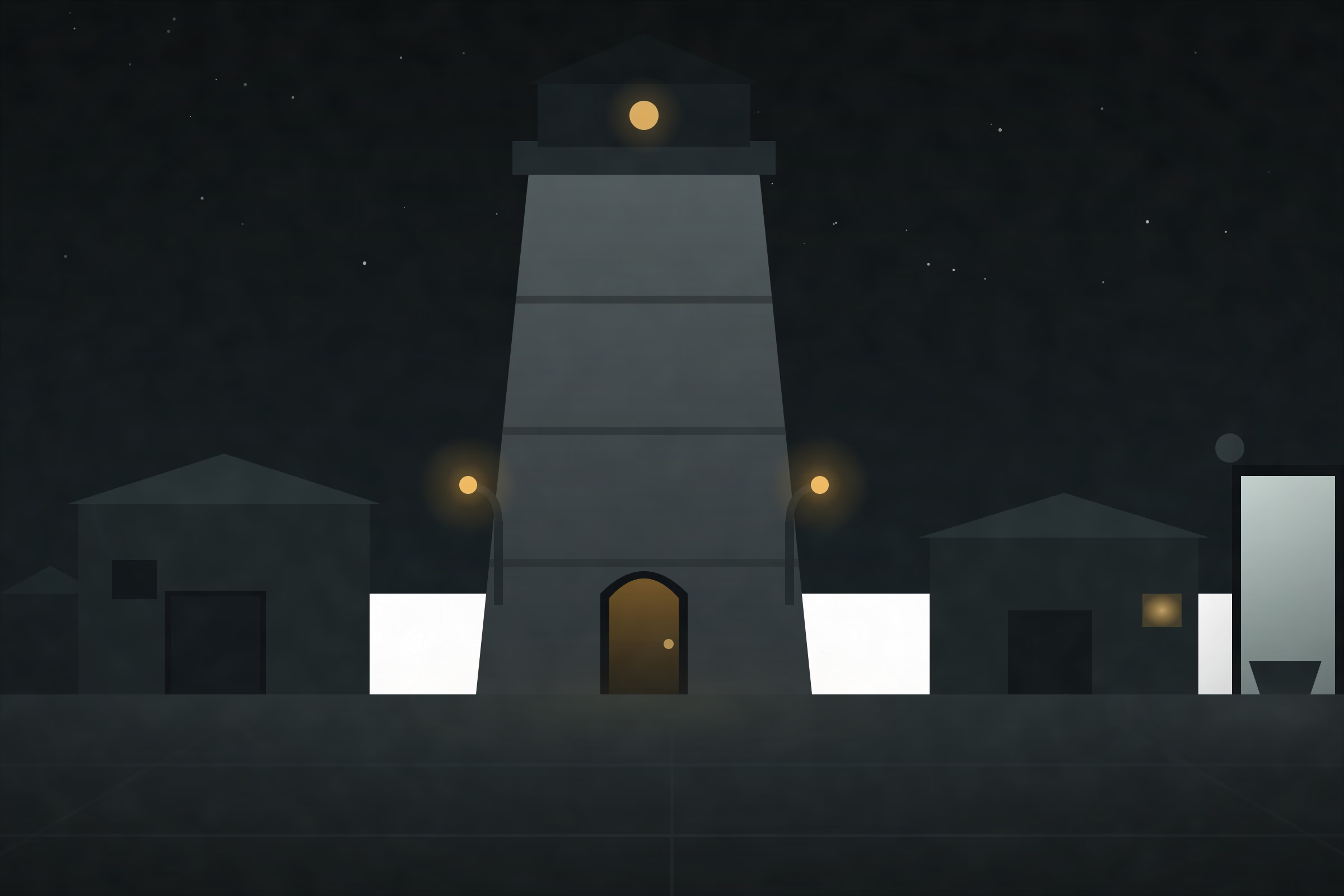
A swept stone path through salt grass leading toward a lighthouse tower, low outbuilding roofs to the right under an overcast sky.

The Path

A stone path climbs from the jetty through salt grass, each flag set true and swept. There are no footprints but your own, though the windward hedge is trimmed and the gutter runs clear. Whoever works here is thorough in the places nobody checks. Ahead, the tower; to the right, low roofs and the hum of something that never quite stops.

Return to the jettyFollow the path to the tower
The Visitors' Book

Better Networks is a software and digital studio in Ocean Grove, working with businesses across Geelong, the Bellarine and the Surf Coast. If you want to be found, or you want something built that deserves to be, start here.

hello@betternetworks.com.auEmail, read daily

0429 583 065Phone, business hours

Contact pageFull details and what to include

The Lamp Room

AI SearchThe optic and its mechanism, at the top of the tower. Being seen by the machines that answer.

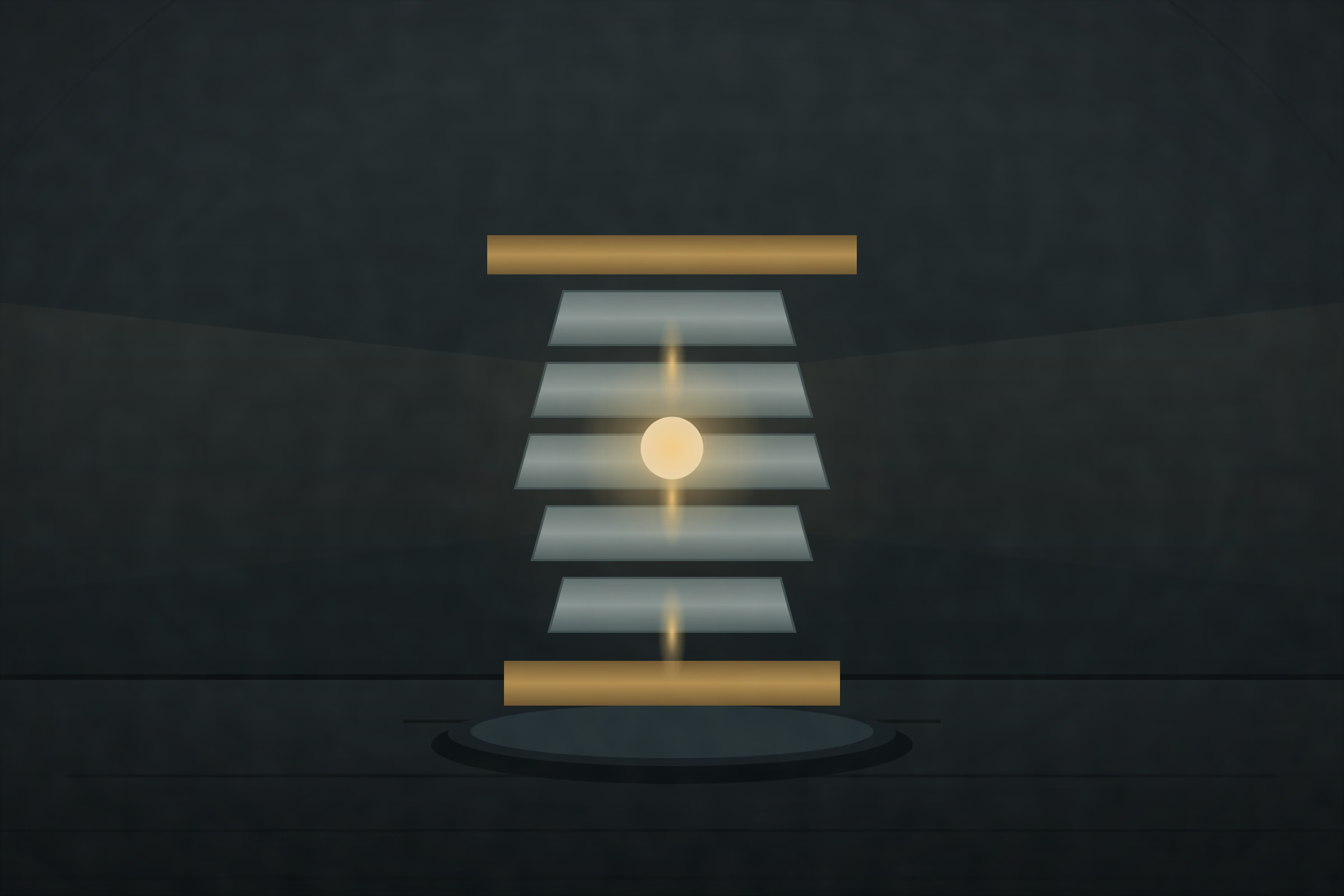
A large Fresnel lighthouse lens in a brass frame, glass prisms catching lamplight, at the top of a dark tower.

The Optic

A great lens in brass and glass, tall as a door, floated on a bath of mercury so a hand can turn it. Its whole purpose is simple: to gather a small light and throw it so far that a stranger on a dark sea knows exactly where they are. Whatever you have that is worth finding, this is how it gets found.

Found by the machines that answer

When someone asks an AI assistant who to hire, the answer is assembled from what it can read and trust about you. We make sure there is something true, structured and well-organised to find: entities, schema, content worth citing, and the technical plumbing that lets models quote you accurately.

  • AI search audits: how large language models currently describe you, right or wrong
  • Entity and structured-data work so machines can state facts, not guesses
  • Content built to be cited, not stuffed
  • Measurement: which answers you appear in, and what changed them

About AI search visibilityThe full service, without the fog

Turn to the mechanismStep out to the galleryDescend to the tower base
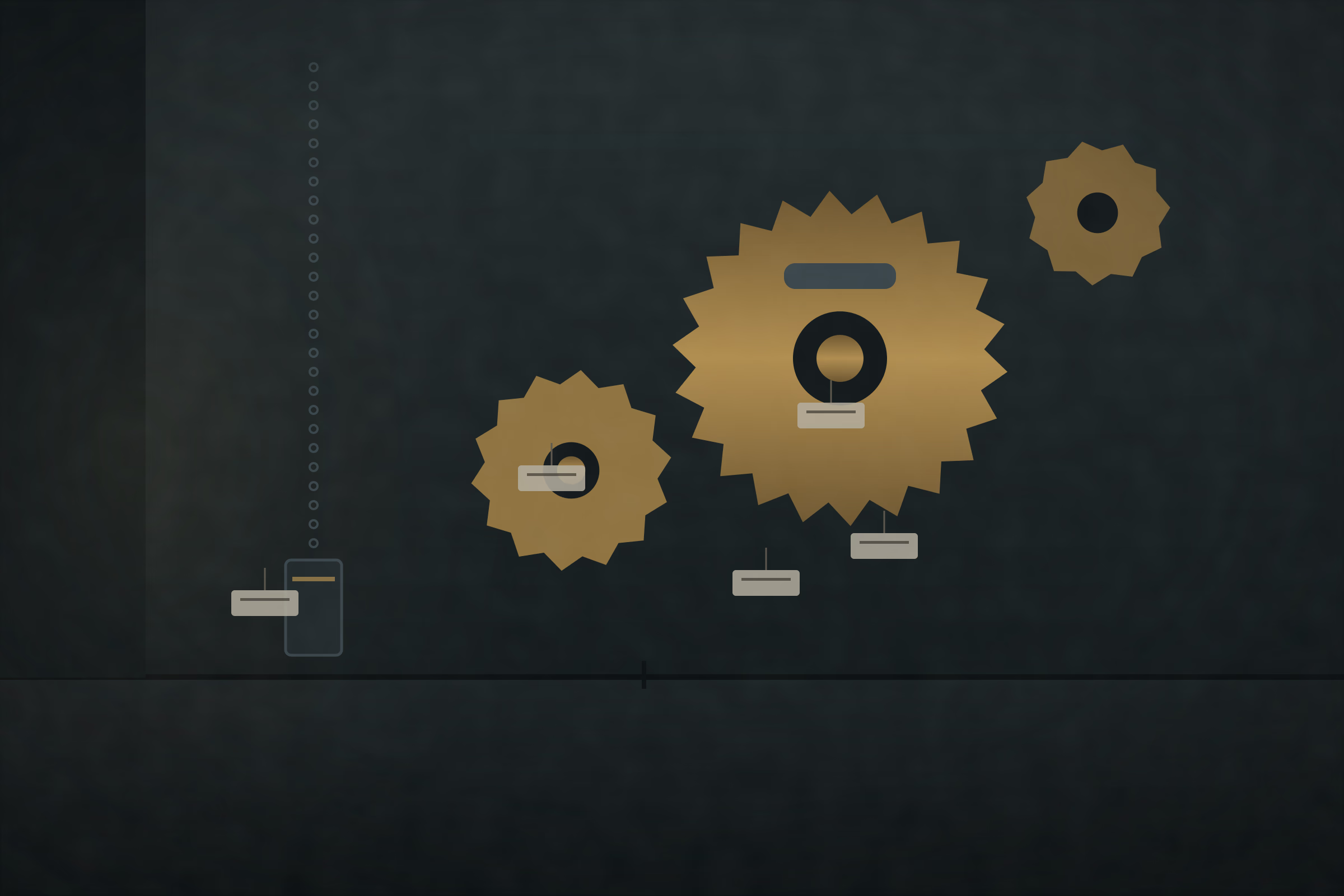
Lighthouse clockwork mechanism with brass gears, a drive weight and a winding crank, parts labelled in neat handwriting.

The Mechanism

The clockwork that turns the optic: a weight, a gear train, an escapement ticking like a patient clock. Every part is labelled in the same neat hand, and the winding crank sits where a hand would leave it. The mechanism does not hurry. It turns the light all night at exactly the speed the books say, and it has never once missed.

How the Light Turns

The optic floats in a bath of mercury, so gently that one hand keeps it moving. A weight, wound nightly, drives the gear train; the escapement spends it at a fixed rate. The flash pattern is the station's signature: no other light in these waters is allowed to match it.

Turn back to the opticDescend to the tower base
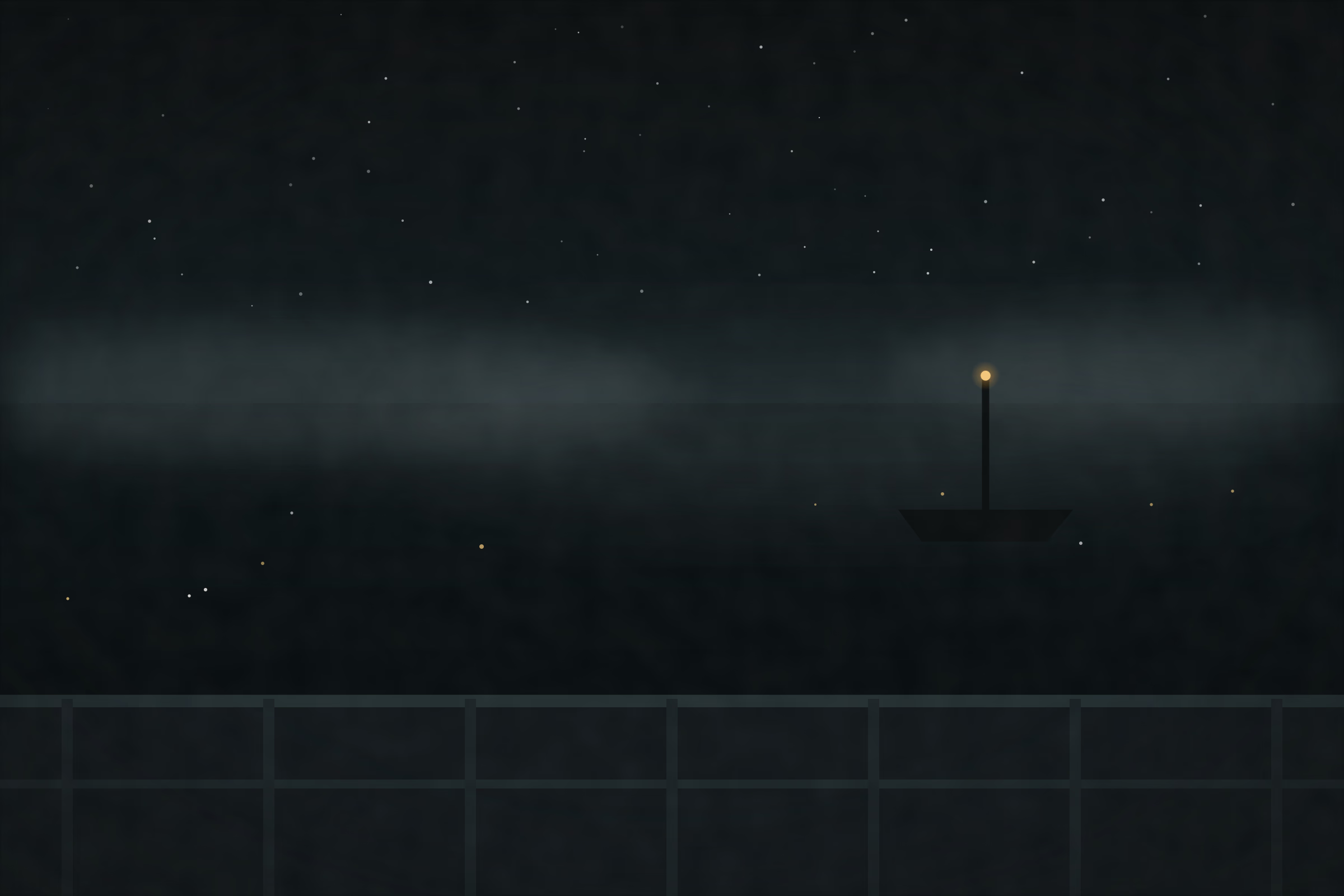
View from a lighthouse gallery walkway over a black sea at night, fog banks drifting, small vessel lights scattered on the water.

The Gallery

The outside walkway, a rail, and then the sea: black, moving, enormous. Fog banks drift through the beam's reach. Out there, at the edge of what the charts cover, lights answer. Fishing boats, freight, the ferry that runs whether or not anyone is on it. The lamp sweeps, and for a moment every one of them stands still, counted.

An Answer

With the lamp lit, the beam reaches out and something reaches back: a trawler working the bank, two flashes, acknowledgement received. The log will record the contact and the time. It will not record who it was. Out here, being seen by the light is enough.

Turn back insideDescend to the tower base

The Chart Room

SEOCharts, soundings, sight lines and plots over time. Navigation as measurement.

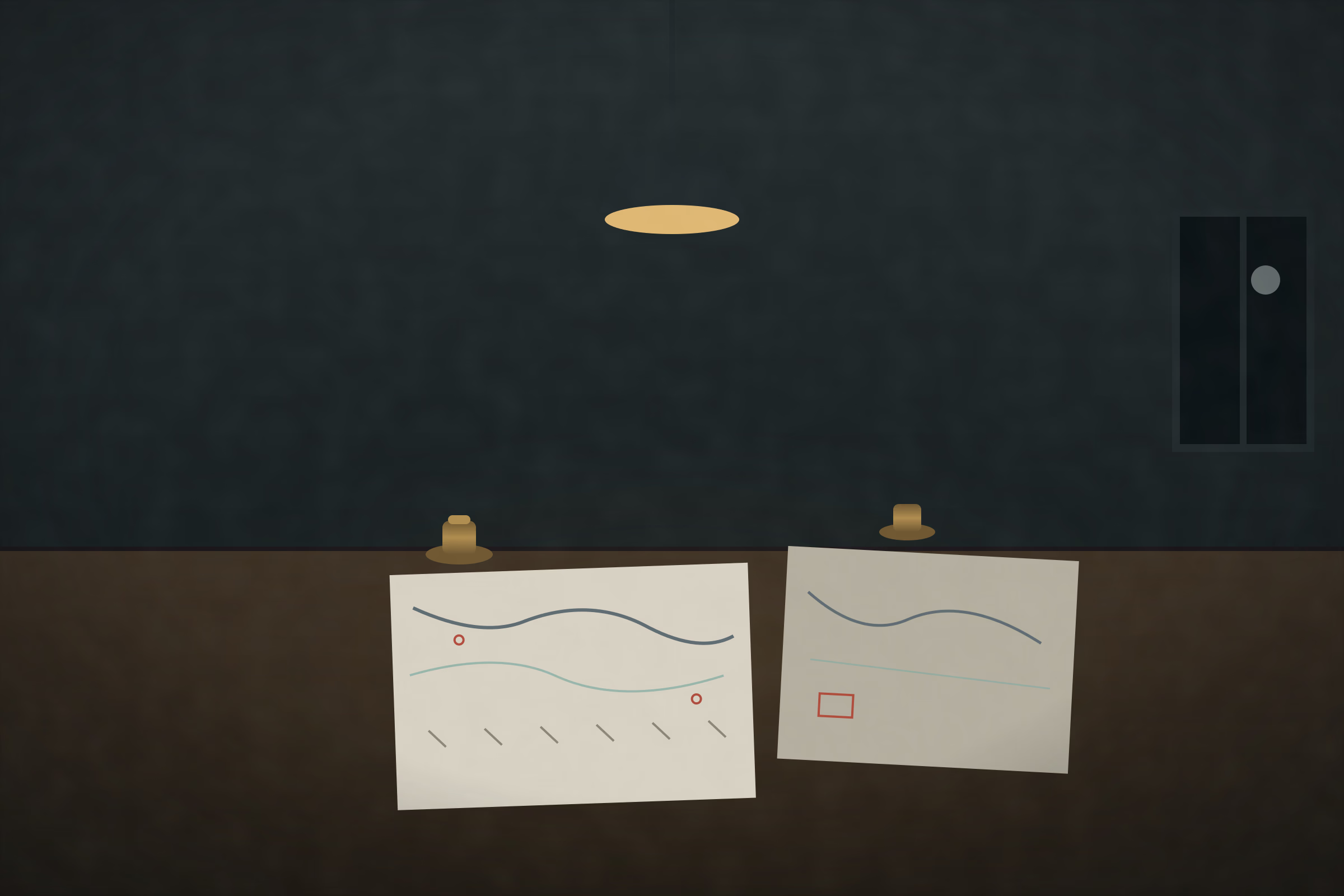
A chart table with nautical charts under brass weights, depth soundings along shipping lanes, red margin warnings, a lamp overhead.

The Chart Table

Charts under brass weights, every current and danger inked in. Soundings run in tidy figures along the shipping lanes; warnings sit in the margins in red. Nothing here is decorative. A chart earns its place by being right, and these are right down to the last correction stamp. This is the room where being found starts: with the measurements.

Measured, plotted, kept in view

Search visibility is a plot over time, not a lever pulled once. We run technical SEO, local search and content programs for businesses in Geelong, the Bellarine and the Surf Coast, and we keep the measurements where you can see them.

  • Technical audits and fixes: speed, structure, crawlability, schema
  • Local search: maps, listings, and the pages that prove where you work
  • Content that answers real questions and keeps earning
  • Reporting you can read in two minutes

The proof is on this station: ClinicComply, our own product, gets roughly two-thirds of its new users from organic search alone.

About SEOWhat we do, and how it is measured

Step to the wallTurn to the drawerLeave the chart room
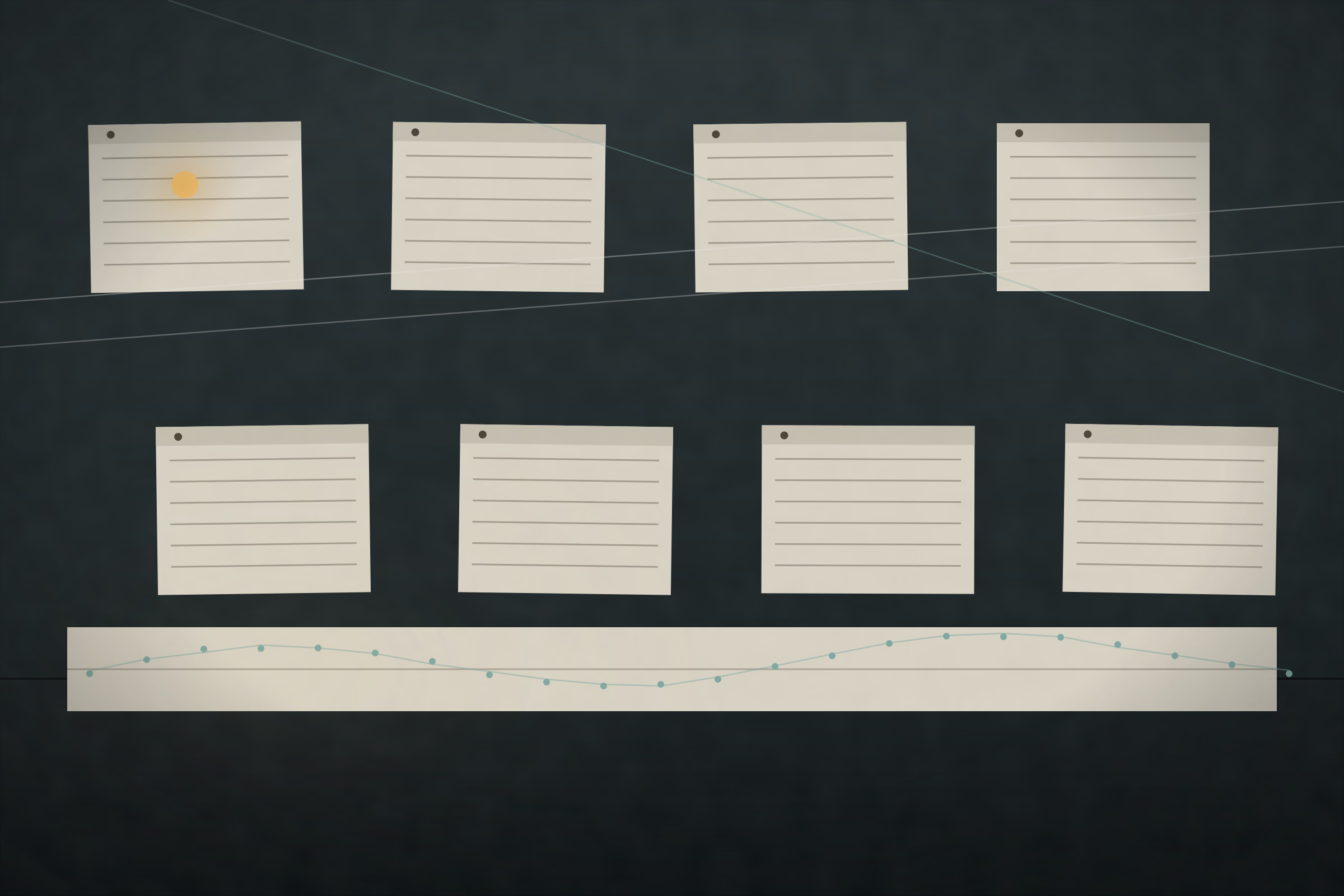
A chart room wall with ruled sight lines, pinned tide tables and a long paper strip of plotted position marks converging into a line.

The Wall

A working wall: sight lines ruled across the window, tide tables pinned, and one long strip of paper where positions have been plotted week after week. The points wander, then settle, then hold a line. Whoever plots them is watching something move and choosing, on purpose, to keep it in view. The pencil never rests twice in the same place.

Sight Lines

Each mark on the strip is a fix: where something was, and when. On their own the points are trivia. In sequence they are a track, and a track can be predicted, corrected, and kept safely in view. That is the whole discipline of the chart room, and it never stops being measurement.

Return to the table
A closed flat chart drawer with brass handles worn bright, set into a cabinet against a dark wall.

The Drawer

A flat map drawer, brass handles worn to the wood. Inside: the charts that used to matter. Coastlines surveyed before the light was built, passages that closed, a light that moved two miles north in 1934 and nothing was ever the same. They are kept because knowing where you used to be is part of knowing where you are.

Retired Charts

Charts are withdrawn when they stop being true, not when they stop being interesting. The 1934 correction moved the light two miles north; every pilot book in the drawer below quietly went out of date the same afternoon. The station kept them, corrected in the margins, because the old errors are the ones that catch people.

Turn back to the table

The Machine Room

Software DevelopmentGenerators, switchboards and cable runs. The engine under the glamour, visibly working.

An electrical switchboard of slate panels, iron lever handles and analogue dials, wiring looms running overhead in a machine room.

The Switchboard

Slate panels, black iron handles, dials with hairline needles. Everything is labelled twice: once for the person who built it and once for the person who maintains it. The board decides where the power goes: the light first, then the rooms, then the spare. Nothing is on that does not need to be, and nothing needed is ever off.

The engine under the glamour

We design and build web software: multi-tenant SaaS products, internal tools, and sites that load fast because they are built properly. Everything we ship, we run, so the work does not stop at launch.

  • Product builds in Next.js and TypeScript
  • Supabase and PostgreSQL with security designed in, not bolted on
  • Payments, integrations and admin portals
  • Performance work for sites that have outgrown themselves

About software developmentHow we build, and what it costs you to find out

Step to the generatorTurn to the cable runLeave the machine room
A diesel generator on a concrete machine room floor, flywheel and belt drive, exhaust piping toward the ceiling, tools on a nearby bench.

The Generator

A diesel genset on acid-etched concrete, running. The flywheel turns at a speed you could set a watch by; the exhaust line is cool enough to touch at the far end. It is serviced on schedule and run in on principle. Everything upstairs, the light, the heat, the kettle, is this, translated.

Running

With the board on, the room settles into its note: a low, even hum that never quite becomes noise. The needle sits a hairbreadth past centre, exactly where the plaque says it should. It has sat there for years, which is the most eloquent thing in the building.

Return to the switchboard
Cable trays along a machine room wall with labelled wiring runs, tags at each end, and a coiled spare pair on hooks.

The Cable Run

Every conductor on the station runs through this tray, and every one is tagged at both ends. Power, signal, and the old telegraph pair, kept because you never know. The runs are dressed by someone who could not tolerate a crossed wire, and the labels are refreshed before they fade. Nothing here is mysterious. That is the point.

Tagged at Both Ends

The rule on this station is simple: no wire goes in unless both ends are labelled, and no label goes up unless someone would still understand it in ten years. The telegraph pair predates everyone here and still tests clean. It stays because the day you retire it is the day you need it.

Return to the switchboard

The Dry Dock

Case StudyA finished, launched vessel in an exhibition bay. ClinicComply, built and operated here.

A floodlit dry dock bay with a finished working vessel moored inside, gangway down, swept concrete and floodlights overhead.

The Exhibition Bay

A dry dock under cover, floodlit, and moored in it, finished, launched and working, a vessel built here, fitted out here, and sent out. It comes back for maintenance the way good work does: confidently, and without surprises. The bay is swept, the gangway is down, and the whole arrangement says the same thing: go on, then. Look.

A vessel's hull in floodlight, waterline clean, the name ClinicComply on the bow, maintenance equipment stowed neatly beside it.

The Hull

ClinicComply, compliance software for Australian GP clinics, built and operated from this station. Multi-tenant, audited, billed, supported. It does an unglamorous job that has to be done exactly right, for people who are busy doing something more important. The paint is fresh because the work is daily, not because it is for sale.

ClinicComply

Compliance management software for Australian GP clinics, built and operated by Better Networks. It tracks the certificates, policies, checks and expiry dates a practice is legally required to keep current, and it makes the next audit a formality instead of a crisis.

  • Multi-tenant: every clinic's data isolated, row by row
  • Built for practice managers, not for demos
  • A vendor portal so equipment suppliers keep their own records current
  • Live and taking customers at cliniccomply.com.au

cliniccomply.com.auThe product itself, in production

The full case studyBuilt, launched, and operated end to end

Return to the bay
A ship's bridge console with navigation instruments arranged across labelled panels, each station lit, wiring hidden.

The Instruments

The bridge of the thing: Next.js on the front, Supabase underneath with row-level security on every table, Stripe at the till, Vercel holding the mooring. Tiered pricing, a vendor portal, backups that get tested. Each piece chosen to be boring in the right place. The stack is not the point of the vessel. It is why the vessel floats.

The Stack

Every component was chosen to be boring in the right place, then wired together by the same people who have to keep it running.

  • Next.js and TypeScript: the whole front of house
  • Supabase and PostgreSQL, with row-level security on every table
  • Stripe: tiered subscriptions, billing handled without a person
  • Vercel: deployments, previews, and one-command rollbacks
  • An IT vendor portal so suppliers maintain their own records

Read the case study

Continue to the logReturn to the bay
An open ship's logbook with ruled entries in neat ink, a pen resting across the page, a brass lamp casting warm light.

The Log

The ship's log, kept current: uptime carried like a debt of honour, and roughly two-thirds of every new user arriving on their own, no salesperson, no campaign. They searched, they found, they signed. That figure is not a claim. It is a measurement, taken monthly, recorded in the same even hand as everything else on this station.

The Results

Roughly 64% of ClinicComply's new users arrive through organic search: no salesperson, no paid campaign. They searched for the problem, they found the product, they signed. That is the SEO service working on our own product, measured monthly.

  • Operated, not abandoned: shipped, monitored and improved since day one
  • Billing, onboarding and support run by the same two hands
  • Uptime treated as a debt of honour

Read the case study

See it live

Return to the instrumentsVisit cliniccomply.com.au